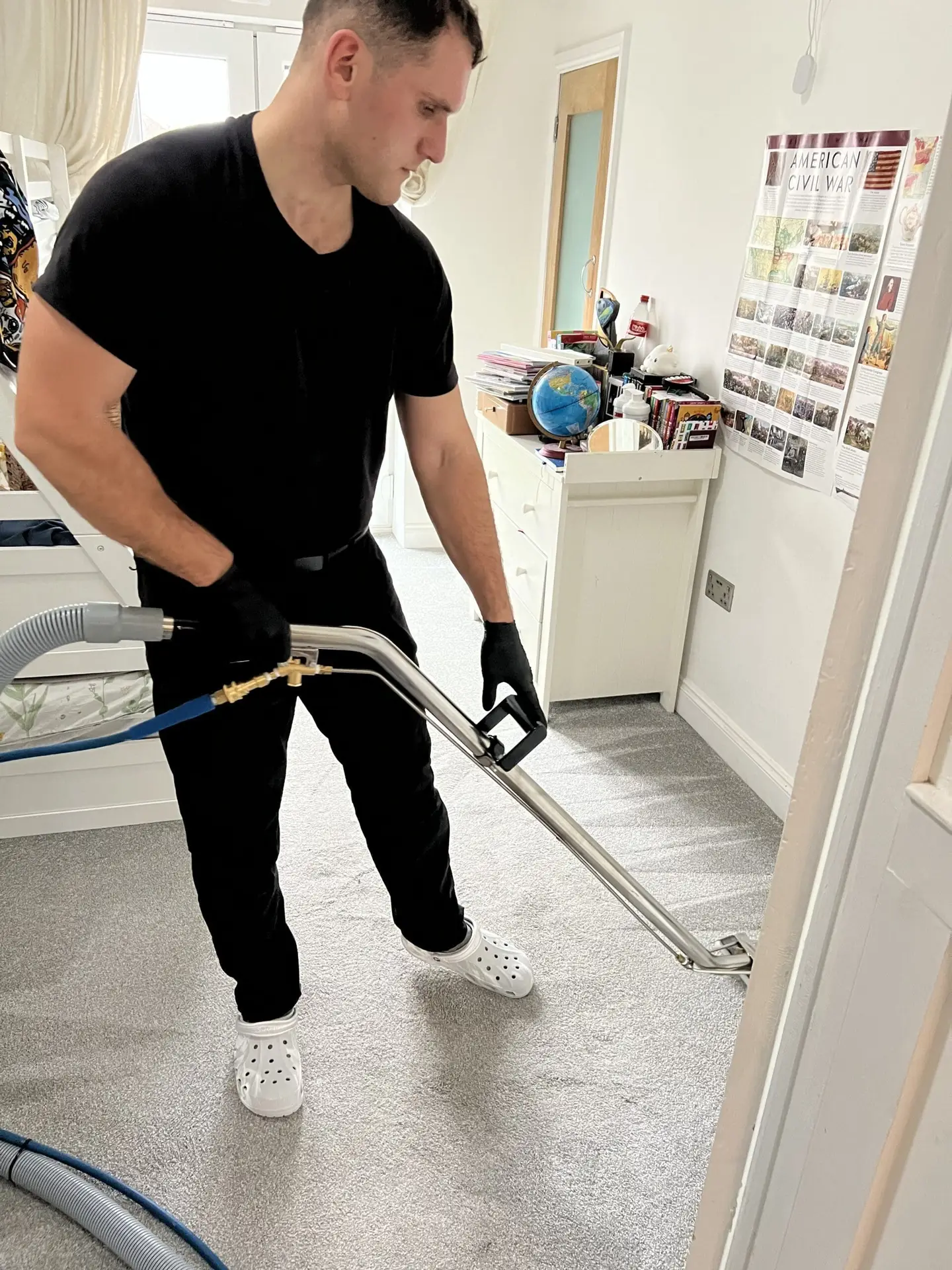
When homeowners hear “professional carpet cleaning,” many assume it’s just hot water and soap. In reality, professional cleaners use specialised solutions tailored to fibre type, stain, and soil condition. Knowing what goes into the process helps explain why professional cleaning works better than DIY, and why your carpets stay cleaner for longer.
In this guide, we’ll walk through the main categories of products, how they work, and why professional cleaners don’t just rely on a single “magic potion.”
Why professional cleaning solutions matter
Carpet fibres are not all the same. Wool, nylon, polyester, and polypropylene respond differently to water, pH, and heat. Add in variables like pet urine, red wine, or grease, and it’s clear that one-size-fits-all cleaning won’t cut it.
Professional cleaners use solutions designed to:
- Break down different types of soil (oily, protein-based, tannin, etc.).
- Protect fibres and dyes from damage.
- Neutralise residues so carpets feel fresh, not sticky.
- Eliminate odours at their source, not just mask them.
Categories of professional carpet cleaning solutions
1. Pre-sprays (Traffic Lane Cleaners)
Pre-sprays are applied before extraction to loosen embedded soils. They often contain surfactants and builders that break the bond between dirt and fibre.
- For synthetic carpets: Alkaline pre-sprays are common, breaking down oils and grease.
- For wool or natural fibres: A milder, wool-safe pre-spray is used to avoid fibre damage.
This step is key because hot water alone won’t fully dissolve oily soils.
2. Spot and stain removers
Not all stains are created equal. Professionals carry targeted spotters:
- Protein spotters – tackle blood, food, milk, or other organic spills.
- Solvent spotters – dissolve gum, paint, or tar.
- Tannin removers – reduce stains from tea, coffee, or wine.
- Rust removers – deal with small metal-related marks.
DIY detergents rarely include this range of tools, which is why stubborn stains often survive home cleaning attempts.
3. Odour control solutions
Pet accidents are the most common source of lingering odours. Professionals use two main categories:
- Enzyme cleaners: These biologically break down organic matter such as urine and food spills. They continue working until the source is neutralised.
- Oxidisers: Release oxygen to quickly break down odour-causing compounds. They’re useful for severe urine contamination or mouldy smells.
Sometimes both are combined for a complete treatment.
👉 Related: Why Carpets Smell After Cleaning
4. Rinses and neutralisers
After pre-sprays and agitation, carpets are flushed with hot water extraction. The rinse solution neutralises the pre-spray, balancing pH and preventing residues.
- Acidic rinses: Common on wool and natural fibres to keep them stable.
- Encapsulation rinses: Leave behind a crystal residue that dries and traps soil, which is vacuumed away later.
This step is crucial for leaving carpets soft and residue-free.
5. Protectors (optional add-ons)
Many professionals offer a post-clean carpet protector, similar to Scotchgard™. This adds a barrier that makes fibres more resistant to spills and soiling. It doesn’t stop carpets from getting dirty but makes them easier to clean next time.
Myths about carpet cleaning solutions
“Professionals just use strong soap.”
False. Soap-based products can leave residues. Modern pro-grade solutions are low-residue, biodegradable, and designed for specific soils and fibres.
“Vinegar cleans everything.”
Vinegar may neutralise some odours and adjust pH but won’t remove oily soil or break down uric acid crystals from pet urine.
“Chemicals damage carpets.”
When misused, yes. But trained professionals match the right solution to the fibre type, ensuring safety. For example, wool requires pH-sensitive products, and reputable cleaners always follow WoolSafe® or manufacturer guidelines.
Case example: Pet urine treatment
A client in Bedford had repeated odour issues even after multiple DIY cleans. The reason? Urine salts had crystallised under the carpet in the underlay.
We:
- Identified the contamination with a UV light.
- Treated the fibres with an enzyme solution.
- Flushed the area with hot water extraction.
- Applied an oxidiser to neutralise any residual odour.
- Advised underlay replacement in one corner where saturation was severe.
After treatment, the carpet was odour-free, and the client avoided replacing the entire carpet.
Why professional chemistry outperforms DIY detergents
DIY rental machines rely on all-in-one detergents, often heavily fragranced to create a false sense of “freshness.” The downside?
- They don’t tackle different stain types.
- They leave sticky residues that re-soil quickly.
- They lack the depth of chemistry for odour or urine treatment.
Professional-grade products, combined with correct technique, ensure a cleaner, fresher, and longer-lasting result.
The Purge Bright approach
At Purge Bright, we select solutions based on:
- Fibre type (wool, nylon, polyester, blends).
- Contamination type (oily soil, pet urine, tannins, rust).
- Client concerns (sensitive occupants, allergies, pets).
We use WoolSafe®-approved products for delicate fibres, advanced enzyme and oxidising systems for odour removal, and low-residue rinses to keep carpets feeling soft and fresh.
Final thoughts
Professional carpet cleaners don’t rely on a single product. Instead, they carry a toolbox of solutions, each designed for a specific task, from breaking down greasy soil to neutralising pet odours. That’s why professional cleaning is far more effective than DIY.
If you want your carpets truly fresh, hygienic, and long-lasting, choosing a professional service with the right chemistry is the best investment.
👉 Next, read: Sofa & Upholstery Cleaning: Fabric-Smart Care