It’s a common question for homeowners: should I hire a professional or just rent a carpet cleaning machine from the supermarket? On the surface, it looks like a way to save money. But the truth is that the results between DIY and professional carpet cleaning can be worlds apart.
In this post, we’ll break down the real differences, the risks of DIY, and why professional cleaning often saves you more money (and hassle) in the long run.
The appeal of DIY carpet cleaning
DIY machines are widely available in UK supermarkets and DIY stores. For a small daily hire fee, you can take home a compact unit, add detergent, and clean your carpets at your own pace.
Why people choose DIY:
- Lower upfront cost than hiring a professional.
- Convenience: no need to book an appointment.
- Feels like taking control of your home cleaning.
But while DIY can freshen up light soil, the results are rarely the same as professional cleaning.
Where DIY machines fall short
1. Limited vacuum power
The number one difference is extraction strength. DIY machines simply can’t match the vacuum lift of a truck-mounted or high-powered portable professional machine. That means more water left in the carpet.
2. Over-wetting and wicking
Because DIY units lack power, users often make multiple wet passes to “get it cleaner”. Ironically, this just soaks the carpet further. The result? Wicking — stains and browning reappear as the carpet dries, because moisture carries hidden soil up to the surface.
3. Residue build-up
DIY detergents are often high in foaming agents. Without strong rinsing and extraction, these chemicals remain in the fibres, creating a sticky residue that attracts dirt faster. Your carpets may look worse after just a few weeks.
4. Drying time
DIY users often report carpets taking 24–48 hours to dry. That’s long enough for musty odours, microbial growth, or even mould to set in — especially in the UK’s damp climate.
Why professional carpet cleaning delivers more
Professional cleaning isn’t just about “stronger machines”. It’s a system:
- Pre-inspection – fibre type, backing, dye stability, and soiling are assessed.
- Pre-treatment – soils are loosened with targeted solutions (safe for wool, synthetics, or blends).
- Agitation – fibres are gently brushed to release embedded dirt.
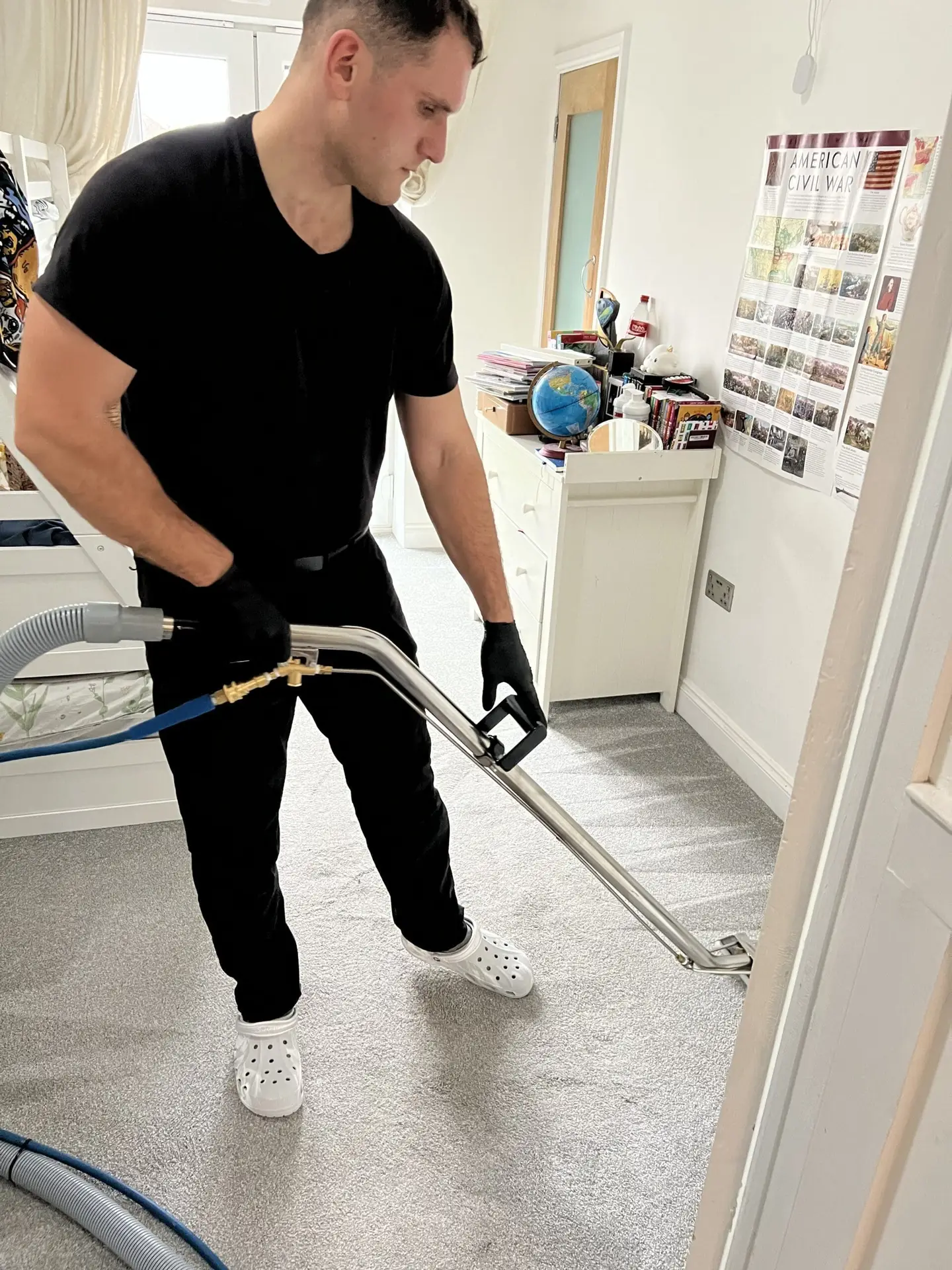
- Hot Water Extraction (HWE) – powerful machines inject and extract simultaneously, removing soil, detergents, and moisture efficiently.
- Drying management – air movers and ventilation advice reduce drying to hours, not days.
The result? A deeper clean, extended carpet life, and healthier indoor air.
Health considerations
Carpets trap allergens, dust mites, and bacteria. A DIY clean may lift surface dirt but won’t remove deep-seated allergens. Professional systems extract at higher pressure and temperature, helping to reduce bacteria and providing a cleaner, healthier environment for families — especially important for households with pets or young children.
Cost comparison: DIY vs Professional
- DIY rental: £25–40 for machine + detergents. Results vary, risk of re-cleaning.
- Professional clean: £80–150 for average home (depending on rooms, carpet type, stains). Long-lasting results, professional insurance, and peace of mind.
While DIY looks cheaper upfront, re-cleans, longer drying times, and faster re-soiling often mean DIY costs more in the long run.
When DIY makes sense
We’re not saying DIY never has its place. For:
- Small fresh spills that can be treated quickly.
- Temporary freshening before guests arrive.
- Light-use carpets in spare rooms.
A small DIY clean can help. But for high-traffic areas, pet accidents, or large family homes, professional cleaning is the smarter option.
Case study: The “wicking” problem
One Bedford client tried DIY cleaning before calling Purge Bright. Their living room carpet looked clean at first, but within days, dark patches returned in the traffic lanes. What happened?
The DIY machine over-wet the carpet, forcing soil from deep in the pile back to the surface as it dried. We re-cleaned using professional HWE, applied a fibre-safe acidic rinse, and managed drying with air movers. The stains did not return.
👉 Learn more about why stains and odours return in our post: Why Carpets Sometimes Smell After Cleaning.
DIY myths busted
- “I can get the same results as a pro if I go slow.”
Not true — extraction power and chemistry matter more than time. - “Vinegar cleans everything.”
Vinegar can neutralise mild odours but won’t break down oils or uric acid crystals from pet urine. - “If it looks clean, it is clean.”
Not necessarily. Invisible bacteria, allergens, and residues may remain deep in the fibres.
Long-term benefits of professional cleaning
Choosing professional carpet cleaning:
- Extends carpet life (delays costly replacement).
- Keeps warranties valid (many UK carpet warranties require professional cleaning).
- Improves indoor air quality.
- Provides expert advice on fibre care and stain prevention.
Final thoughts
DIY carpet cleaning may seem like a bargain, but when you factor in time, risk, drying, and lasting results, professional carpet cleaning is the clear winner.
At Purge Bright, we combine advanced equipment with fibre-safe solutions and drying management to ensure your carpets stay clean, fresh, and healthy — not just for days, but for months.
👉 Next, read: What Solutions Do Professional Carpet Cleaners Use?