You’ve just had your carpets cleaned, expecting a fresh and spotless result. But instead of that “new home” feel, there’s a lingering musty, damp, or sour smell. It’s one of the most common concerns homeowners raise.
So why do carpets sometimes smell after cleaning — and how can you prevent it? Let’s dig deeper into the science, the causes, and the solutions.
Why freshly cleaned carpets can smell
Carpets are like sponges. They don’t just hold dust and dirt; they also absorb moisture, spills, and even odours over time. When you introduce water and cleaning solutions, several things can happen:
- Moisture penetrates deep into the fibres and underlay.
- Hidden contaminants are reactivated.
- Drying takes longer than expected.
If drying is slow or incomplete, odours develop — often worse than before.
The most common causes of carpet odours after cleaning
1. Slow drying and excess moisture
This is by far the number one cause. When a carpet stays damp for more than 12–18 hours, the conditions are perfect for microbial activity. Think of it as leaving wet clothes in the washing machine overnight — the same stale smell can develop.
Why it happens with DIY machines: Rental or supermarket carpet cleaners have weaker vacuums, so more water is left behind. Users may also “over-wet” the carpet by going over the same patch too many times.
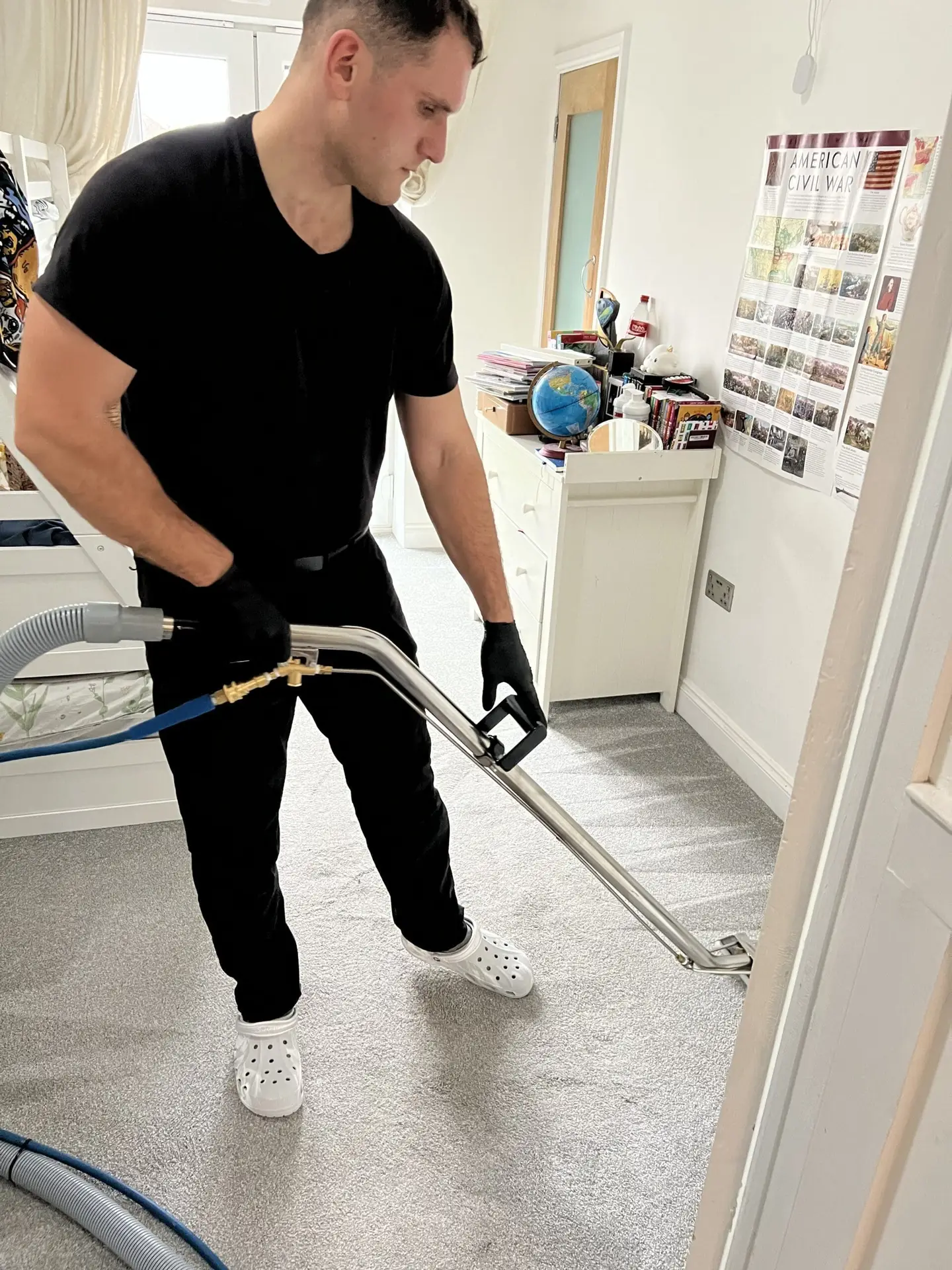
Why it’s different with pros: At Purge Bright, we use high-powered extraction machines and multiple dry passes, followed by air movers or ventilation advice to speed up drying.
2. Pet urine or spills hidden in the underlay
If a carpet has been exposed to pet accidents, the urine often soaks through into the underlay or even the subfloor. While a surface clean may temporarily mask it, once water is added, uric acid crystals dissolve and release odours again — often stronger than before.
These smells can be:
- Ammonia-like (fresh urine).
- Sour or musty (older deposits).
Proper treatment requires targeted urine decontamination, and in severe cases, replacement of underlay.
👉 Related post: What Solutions Do Professional Carpet Cleaners Use?
3. Wick-back of soils during drying
When carpets are over-wet, water can carry deep-seated dirt and spills up to the surface as the fibres dry. Along with visible stains (called “wicking”), odours can return too.
This is why professional cleaners carefully balance the amount of solution used and maximise extraction power.
4. Old carpets and natural fibres
Older carpets, especially wool, may have absorbed years of spills, smoke, or even cleaning residues. When re-wetted, those smells can re-emerge. Wool carpets, in particular, hold onto odours if drying is slow, because natural fibres absorb more moisture than synthetics.
5. Chemical or detergent residues
Some DIY shampoos leave behind perfumes or sticky residues. Instead of smelling fresh, your carpet may smell overly perfumed or even “chemical-like”. Worse, these residues attract new dirt faster.
Professional systems use fibre-safe, low-residue rinses that restore carpets to a neutral state, free of chemical build-up.
How to prevent odours after cleaning
1. Control drying times
- Open windows for ventilation if the weather is mild.
- Use fans or air movers to speed up evaporation.
- Keep heating on in cooler months to prevent damp.
- Avoid walking on the carpet until it is fully dry.
Professional cleaning should leave carpets dry within 6–12 hours, not days.
2. Treat underlying issues
If pet urine is the culprit, odours won’t fully disappear with a general clean. Targeted urine treatments, enzyme cleaners, or oxidisers may be needed. In severe cases, underlay replacement is the only solution.
3. Choose the right cleaning method for the carpet
- Synthetic carpets: Hot Water Extraction (HWE) is usually best.
- Wool carpets: Require careful temperature and pH control, plus managed drying.
- Delicate fibres: May need low-moisture cleaning to avoid distortion and odour problems.
4. Work with professionals who understand fibre science
At Purge Bright, we don’t just “wash carpets”. We:
- Test the fibre type and backing.
- Match solutions to the carpet and contamination.
- Extract thoroughly and manage drying.
- Provide honest advice on whether underlay replacement is needed.
This prevents problems rather than just masking them.
When to call a professional after DIY cleaning
If your carpet smells musty, sour, or like pet urine after a DIY attempt, it’s a sign moisture or contamination is trapped below the surface. A professional clean can:
- Re-flush the carpet to remove residues.
- Apply odour-neutralising treatments.
- Dry carpets quickly with proper airflow.
It’s often more cost-effective to fix the issue professionally than to repeat DIY attempts.
Final thoughts
A clean carpet should leave your home smelling fresh and comfortable, not damp or musty. If odours appear after cleaning, the problem usually comes down to slow drying, hidden contaminants, or residue build-up.
With Purge Bright, we use powerful extraction, safe chemistry, and expert drying management to ensure carpets stay clean and fresh — not just for days, but for months.
👉 Next, read: Sofa & Upholstery Cleaning: Fabric-Smart Care