Keeping carpets clean is more than just about looks. It’s about health, comfort, and making your home feel welcoming. In the UK, where damp weather can make carpets prone to odours and wear, choosing the right cleaning method is crucial. So, what really is the most effective way to clean a carpet today? Let’s break it down.
Why carpet cleaning matters
Carpets act like a giant filter in your home, trapping dust, allergens, and bacteria. Regular vacuuming is essential, but it only removes surface debris. Over time, dirt, oils, and microscopic particles work their way deep into the fibres. If left untreated, this build-up can:
- Dull the colour and texture of your carpet.
- Break down fibres, shortening the carpet’s lifespan.
- Trigger allergies or worsen asthma symptoms.
- Lead to lingering odours, especially in humid homes.
That’s why deep cleaning is not just cosmetic. It’s part of healthy living.
The leading carpet cleaning methods in the UK
There are several professional methods used today. Each has its place, but one stands above the rest.
1. Hot Water Extraction (HWE), the gold standard
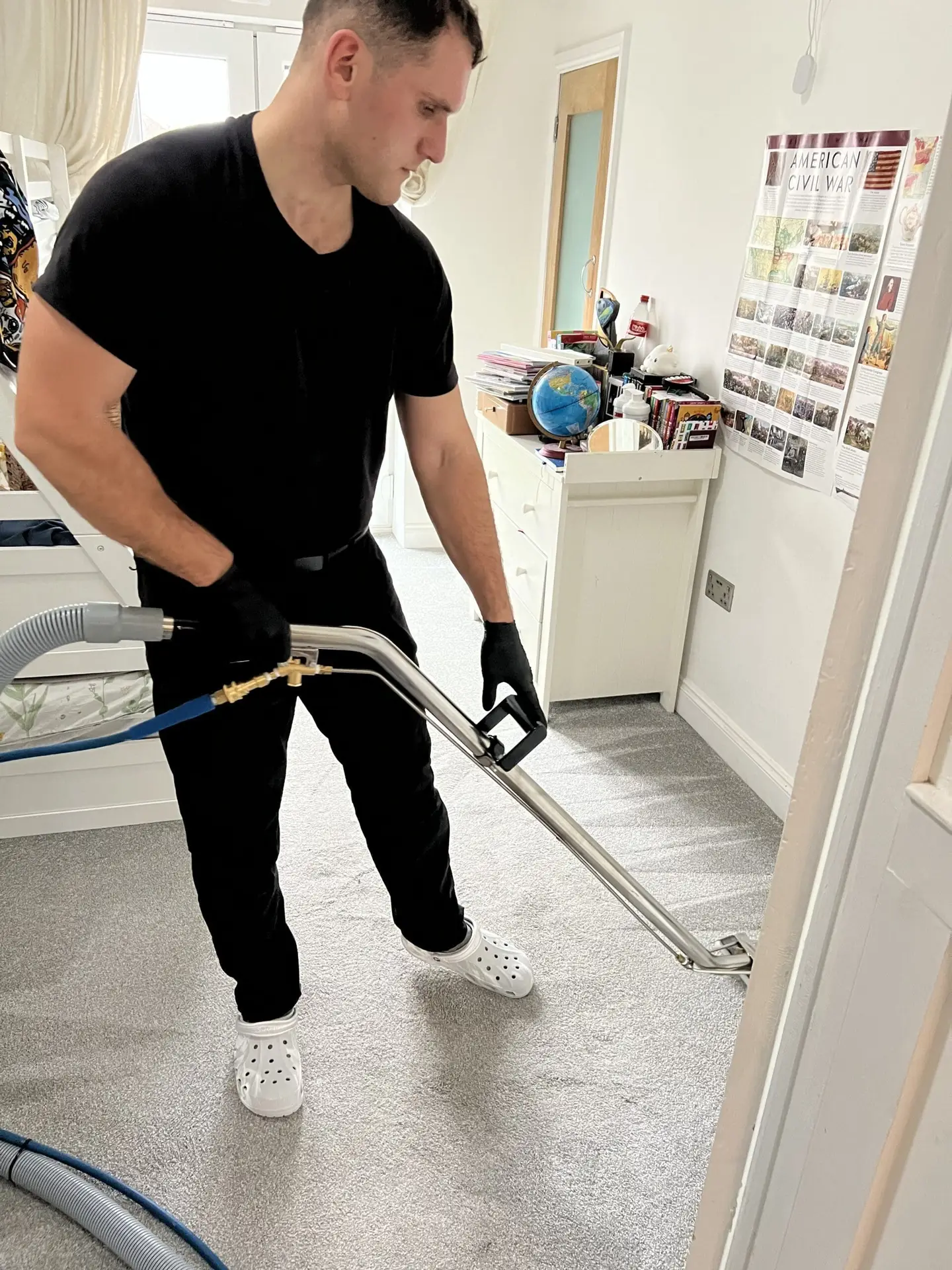
Often called “steam cleaning” (though it’s not steam), hot water extraction works by:
- Applying a cleaning solution to loosen soil and break down oils.
- Agitating fibres with a brush or machine to release dirt.
- Injecting hot water under pressure into the carpet pile.
- Extracting the water, along with dirt, allergens, and cleaning residues.
Why it works best:
- Penetrates deep into fibres for a thorough clean.
- Removes both dry soil and sticky residues.
- Reduces allergens and bacteria.
- Safe for most modern carpets when carried out by trained professionals.
At Purge Bright, we pair HWE with controlled drying systems, air movers and ventilation advice, to ensure carpets dry quickly and odours don’t develop. This is the method behind our professional carpet cleaning in Bedford.
2. Dry Carpet Cleaning
This method uses specialised absorbent compounds or encapsulation products. They’re brushed into the carpet, capturing soil, and then vacuumed out.
When to use it:
- Low-pile carpets in offices or areas needing minimal downtime.
- Maintenance cleans between deep cleans.
3. Bonnet/Pad Cleaning
A rotary machine with an absorbent pad is used to “buff” the carpet surface. It improves appearance quickly but only touches the top layer.
Downside:
- Doesn’t remove deep soil.
- Can push dirt further down, leading to wicking.
Why DIY machines often fall short
It’s tempting to hire a supermarket carpet cleaner, but DIY often leads to:
- Over-wetting: weaker extraction leaves too much water in the carpet.
- Wicking: stains reappear as moisture rises during drying.
- Residue: supermarket detergents can leave sticky films, attracting dirt faster.
Professional equipment delivers stronger vacuum power, balanced solutions, and proper drying, saving you headaches (and extra cost) down the line.
👉 For more detail, see our guide: DIY vs Professional Carpet Cleaning.
The drying factor: where many go wrong
Even with the best method, poor drying can ruin results. Damp carpet is a breeding ground for microbes, leading to that dreaded “wet dog” smell.
At Purge Bright, we:
- Use multiple dry passes to remove as much moisture as possible.
- Set up air movers where needed.
- Advise clients on ventilation, heating, and safe walk-on times.
This ensures your carpets are not only clean but also fresh and hygienic.
Matching the method to the carpet
Not all carpets are the same. Wool, synthetic blends, and delicate fibres require different solutions. For example:
- Wool carpets: benefit from slightly acidic rinses to maintain fibre integrity.
- Polypropylene carpets: resist staining but can hold odours if not properly flushed.
- Delicate blends: may need low-moisture methods to prevent distortion.
This is why professional assessment before cleaning is essential.
How often should carpets be cleaned?
For UK households, we recommend:
- Every 6–12 months in high-traffic areas.
- Every 12–18 months in bedrooms or lighter-use areas.
- More often if you have pets, children, or allergies.
Routine professional cleaning extends carpet life and maintains a healthier home.
Final thoughts
The most effective way to clean a carpet is professional hot water extraction, backed up by proper pre-treatment, agitation, and thorough drying. Other methods have their uses, but HWE remains the only process that truly deep cleans while protecting fibres.
At Purge Bright, we specialise in carpet, upholstery, and stain removal across Bedfordshire. Our focus is not just on appearance, but on long-term freshness and care.
👉 Next, read: Why Carpets Sometimes Smell After Cleaning